



January 27, 2010
Write What You Know
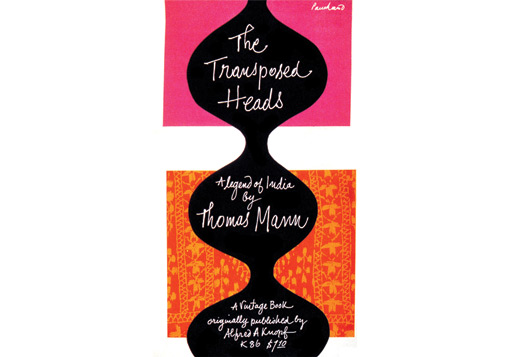
My handwriting should be a font. That’s what everyone has been saying since I was about 12, and while I agree it is true, it never seems like a compliment to me. What good is handwriting nowadays? To have nice handwriting seems sort of like a secretarial skill. My mother, my grandmother and one of my aunts also have good handwriting, and there’s a certain familial evolution from Palmer copperplate to more modern printing. The fourth grade year I spent learning cursive (another bit of dead curriculum) was hell. But we all know how to write a thank-you note.
Because/despite this, I love graphic design that uses handwriting. When I did research on Paul Rand, I was always attracted to his bits of happy, open, handwritten text. I have no idea if it was his hand, but it made him seem much more accessible. The greatness of his UPS logo is partly due to the homemade jauntiness of the package bow. Ditto for the Alvin Lustig covers of earlier vintage. Handwriting seems to have gone out of style (is it the infinite fonts), except for the work of designers who are fans of past glories or the effect of tears on ink.
Which is why I was so pleased to see the cover for David Barringer’s There’s Nothing Funny About Design (by Felix Sockwell). And I was hoping Barringer had written in the book about choosing the cover for his book, since he writes about other book covers, and the validity of written explanations for design work. No such luck. I have to assume handwriting was chosen for some of the same reasons Rand picked it in 1959. Handwriting seems both exotic and casual amidst a sea of proper type. The little face in the lower left of Barringer’s could well have come from a 1950s philosophy paperback. The whole is amusing without being expressly funny. It is for the text to make you laugh.
Observed
View all
Observed
Share on Social


By Alexandra Lange
 Alexandra Lange is an architecture critic and author, and the 2025 Pulitzer Prize winner for Criticism, awarded for her work as a contributing writer for Bloomberg CityLab. She is currently the architecture critic for Curbed and has written extensively for Design Observer, Architect, New York Magazine, and The New York Times. Lange holds a PhD in 20th-century architecture history from New York University. Her writing often explores the intersection of architecture, urban planning, and design, with a focus on how the built environment shapes everyday life. She is also a recipient of the Steven Heller Prize for Cultural Commentary from AIGA, an honor she shares with Design Observer’s Editor-in-Chief, Ellen McGirt.
Related Posts

Civic Life
Bert de Muynck|Essays
Walkie talkie: An architect-turned-tour guide on designing presence in Lisbon

Business
Courtney L. McCluney, PhD|Essays
Rest as reparations: reimagining how we invest in Black women entrepreneurs
Design Impact
Seher Anand|Essays
Food branding without borders: chai, culture, and the politics of packaging

Graphic Design
Sarah Gephart|Essays
A new alphabet for a shared lived experience
Related Posts
Civic Life
Bert de Muynck|Essays
Walkie talkie: An architect-turned-tour guide on designing presence in Lisbon
Business
Courtney L. McCluney, PhD|Essays
Rest as reparations: reimagining how we invest in Black women entrepreneurs
Design Impact
Seher Anand|Essays
Food branding without borders: chai, culture, and the politics of packaging
Graphic Design
Sarah Gephart|Essays